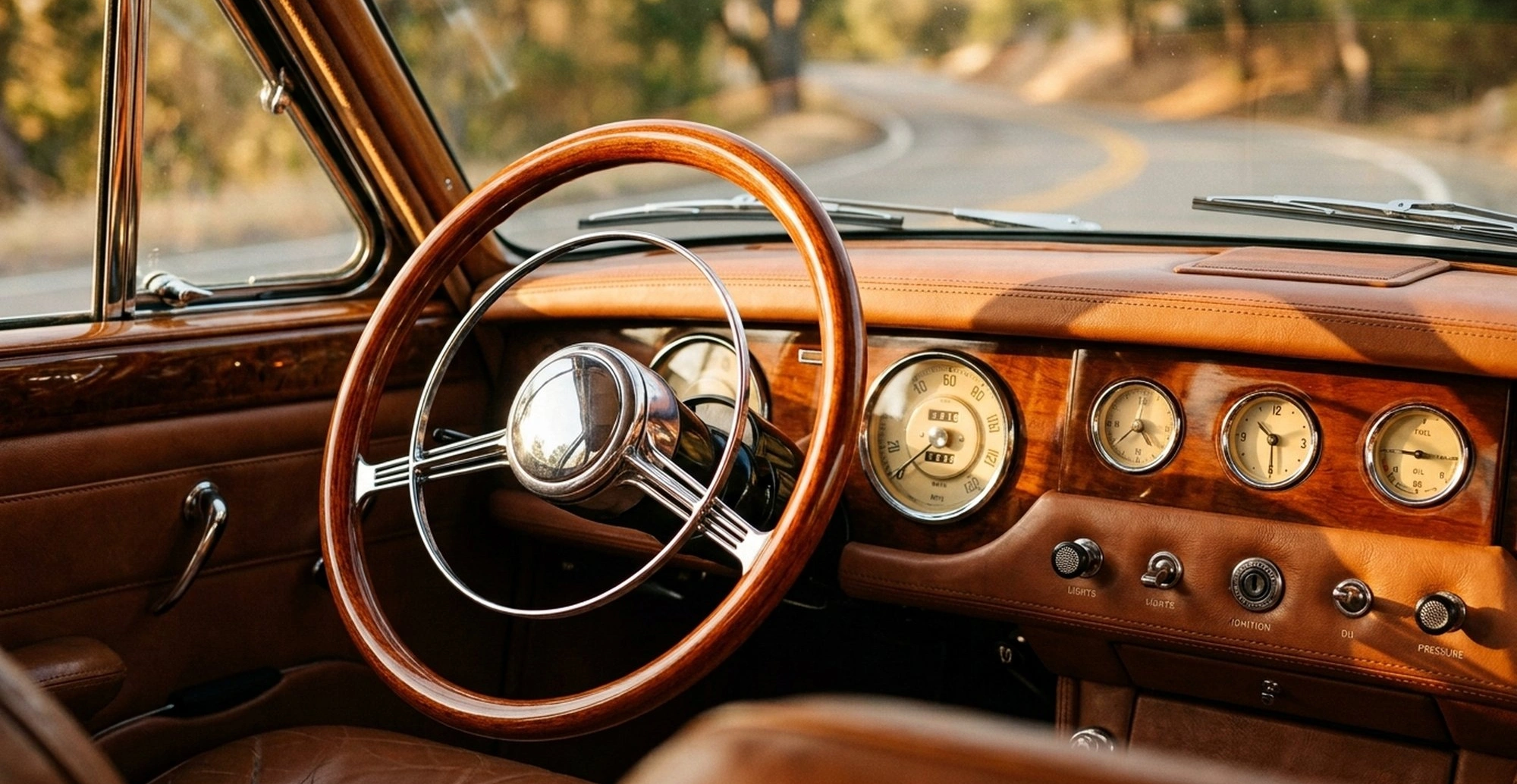
Your investment portfolio sends you quarterly statements. Your classic car needs a new clutch. Your wine merchant suggests another exceptional vintage. Your favourite watch has apparently become “highly collectable”. All four may represent wealth. Only one necessarily began as a financial decision.
Classic cars, fine wine and watches occupy an appealing space between spending and investing. They offer craftsmanship, history and enjoyment, alongside the possibility of appreciation. But when a hobby becomes a substantial asset, it deserves a place in your financial planning. That type of return cannot be put on a spreadsheet, and of course there is nothing unreasonable about buying something because you love it.
A classic car can provide weekends away, friendships and the satisfaction of preserving a piece of engineering. A watch might mark a career milestone. Wine can turn an ordinary dinner into a memorable occasion. Those benefits are real, even when prices fall. The difficulty begins when enjoyment becomes a justification for optimistic financial assumptions.
“I have always wanted one” gradually becomes “it will only go up in value”. A useful question to ask yourself is: would you still be pleased with the purchase if its resale value stayed unchanged for ten years?
Why auction records say little about collectable returns
Auction records are irresistible. An exceptional Ferrari sells for millions; a rare watch exceeds its estimate; a celebrated cellar attracts international bidders. These sales demonstrate demand for particular objects. They say much less about the prospects of an ordinary collection.
Knight Frank’s 2026 Wealth Report illustrates the differences. Its luxury investment index fell 0.4% during 2025, while watches rose 5.1%, classic cars declined 3.7%, and the Liv-ex Fine Wine 100 fell 2.5%. Within each category, results varied. A famous badge, prestigious château or desirable watchmaker does not make every example equally attractive. An index is also a market indicator, rather than the return an individual owner receives after buying, maintaining and selling an asset.
What does it cost to own a collection?
A collectable can rise in value while still costing its owner money overall. Cars need insurance, storage, servicing and repairs. Restoration can improve enjoyment without adding an equivalent amount to resale value. Wine requires appropriate storage and insurance. Buying and selling costs reduce the eventual proceeds, while poor storage can damage the wine and its marketability.
Watches bring servicing costs, insurance and the ‘spread’ between dealer buying and selling prices.
Imagine buying an item for £50,000 and selling it years later for £60,000. That sounds like a £10,000 gain. Deduct ownership expenses and transaction costs, then consider inflation and the return available elsewhere. The financial result may look rather different.
Why provenance and storage affect a collection’s value
With collectables, what you own includes its history. Service records, authenticity, condition, original components and documentation can influence a buyer’s willingness to proceed. For wine, storage history and the ability to establish ownership matter. Independent expertise is particularly valuable before an expensive purchase. A reassuring sales description is no substitute for examining the item, its paperwork and the seller’s reputation.
Where someone else stores the asset, ask practical questions: is it specifically identified as yours? What evidence confirms ownership? What happens if the storage provider or merchant fails?
A valuation is not a buyer
A collection valued at £200,000 does not necessarily provide £200,000 when you need it. An insurance valuation, dealer asking price and achievable selling price serve different purposes. Finding the right buyer can take time, and a quick sale may involve a substantial discount. This matters considerably if the collection is expected to fund retirement, school fees or a property purchase. It also creates an emotional complication. Someone may happily describe a beloved car as part of their retirement assets while having no intention of selling it. Financial planning should reflect that attachment.
How a wealth manager can fit a collection into your retirement plan
A wealth manager need not select your next vintage or authenticate a watch to make a useful contribution. Their role is to consider how the collection fits alongside pensions, investments, property and cash. Could you meet your spending needs without selling it? Has collecting created too much exposure to assets that are difficult to realise? They can model different outcomes, coordinate with specialist valuers and help identify where tax or estate-planning advice is needed. Tax treatment varies and broad claims that collectables are “tax-free” deserve scrutiny. Direct ownership should also be distinguished from investment schemes built around collectables. Regulation and consumer protections depend on the arrangement.
Enjoy the collection, understand the commitment
There is no universal percentage of wealth that everyone should devote to passion assets. Affordability, financial security and willingness to sell all matter. The sensible aim is to understand what the collection contributes: pleasure, potential resale proceeds, or both. If yours has become financially significant, findawealthmanager.com can help you explore firms able to consider it within your wider wealth plan.
Important information
This article is provided for general information only and does not constitute financial, investment, pension or tax advice.
Always remember that investing involves risk and the value of investments may fall as well as rise. Past performance should not be seen as a guarantee of future returns.
Find the Right
Wealth Manager -
in Under 3 Minutes
Start your free search
Join thousands of individuals who've used our tool to find trusted, FCA-regulated advisers to maximise their wealth.
- No fees, no obligation
- Private & secure matching in minutes
- Trusted since 2012 by thousands of clients